
I’ve never felt so relieved.
The start of my journalism training on a snow-covered February day at Darlington College.
Though I’d spent a bit of time on a sports desk, sat with the other savvy students, who’d all covered news, I felt imposter syndrome growing (if it was a thing back then).
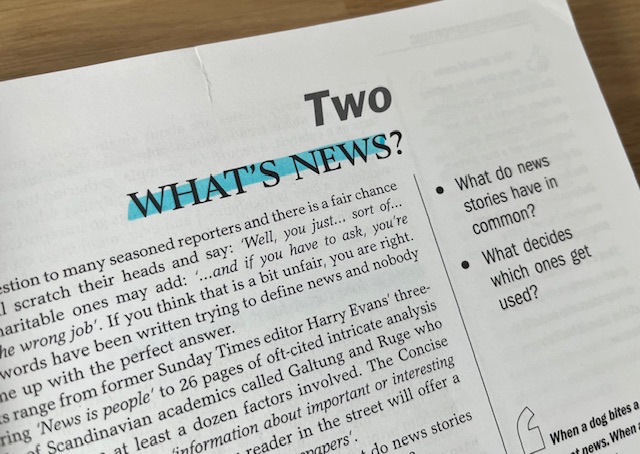
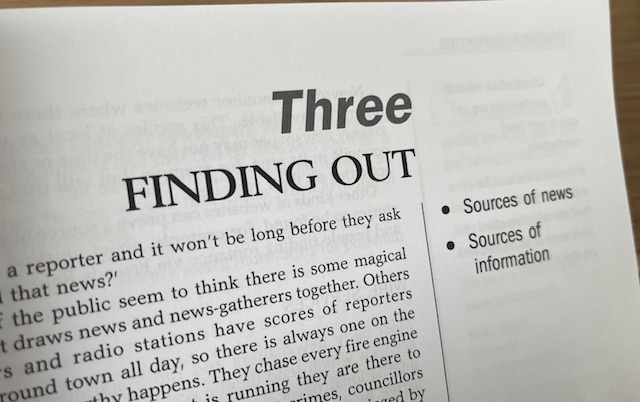
My shiny new textbook flopped open and I saw the first sections explained what stories were and where they came from.
I exhaled, probably excessively loudly, and my shoulders relaxed. It wasn’t just me, then. You’ve got to learn this stuff.
Storytelling or story hunting?
We talk about storytelling A LOT. I talk about storytelling A LOT.
But have we been missing something?
I’ve spent the last year talking storytelling with lots and lots of comms people.
And one thing has grown clear: it’s story-hunting, as much as storytelling, that needs our attention.
The previously heavy bleed of journalists into comms and PR roles (me included) led to an automatic assumption of the ability to find and create stories.
But times and teams change. Are baked-in story-sniffing instincts as embedded as they once were?
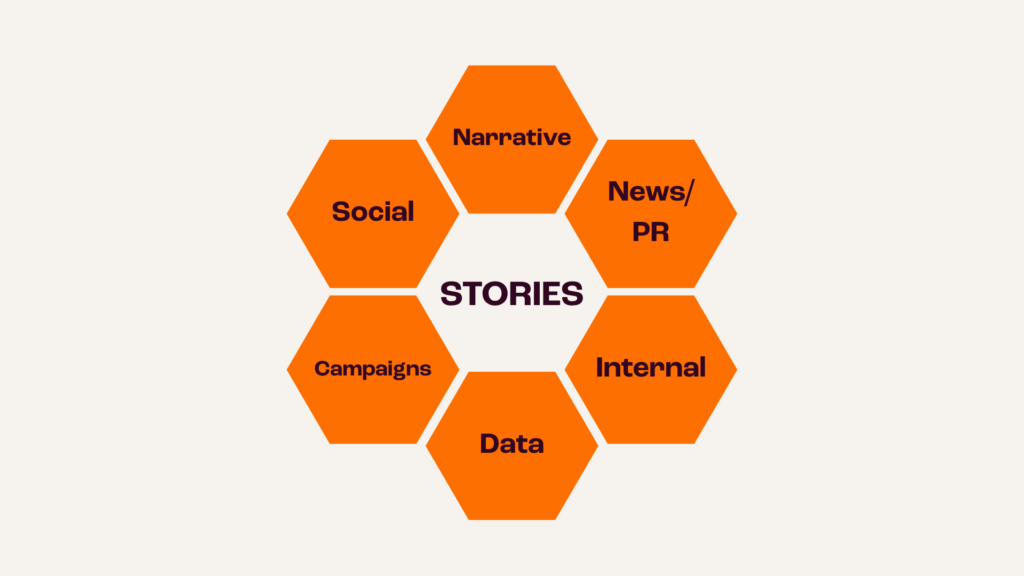
Do we know what stories are and where to find them?
With our collective insistence on storytelling, is there a fundamental question we need to ask first: do we know what stories are and where to find them?
To paraphrase Jurassic Park (yes, I’ve been reading the book): we’ve spent so long saying we should, we never stopped to ask how.
Skills in demand
And it matters.
Our organisations have big challenges and big plans.
Trust in institutions remains an issue and strong storytelling provides a foundation for rebuilding it.
Cutting through and grabbing people’s limited attention needs great stories – story-led campaigns can be much more effective.
There’s a gap and it’s one AI can’t fill.
It cuts across every aspect of our comms world – from the strategic to the frontline.
But there’s a gap. And it’s one AI can’t fill.
“I definitely notice it, said one Director of Comms. “Story-hunting skills are lacking.”
Another Head of Comms agreed there was a “noticeable skills gap” within her team.
We all need and want the skills. They’ve never been more valuable.
But like the chilly, nervous journalism student, we might just need to teach them.
A lost art?
A route into comms via journalism is not the option it once was. Press Gazette reported 4,000 journalism job losses in 2024, double that in 2023.
And just 11% of NCTJ graduates (the national journalism diploma) go directly into PR or comms role.
Team story-hunting may have stalled but the broader, digitally-focused skills of the modern comms pro have boosted a more campaign and outcome-focused approach.
“The older cohort of us have strong backgrounds in media and storytelling, that journalistic instinct,” said one experienced Comms Manager.
“Our younger gen are very digital-focused and great campaigners.”
It’s providing foundations – the who, what, where, why and how.
And the reverse seems true too.
“We have quite a few ex-journos who are great with writing but translating that into digital and social content is a challenge,” said another Head of Comms.
Bringing the two skillsets together is where the magic will happen.
The new mindset
When doing sessions with teams, I ask what barriers to storytelling they experience.
The answers invariably revolve around the ‘how’ – finding people, encouraging them, getting good content from them.
So it’s about providing the foundations. The who, what, where, why and how – just like the opening pages of that journalism textbook.
And when the cry for better stories or storytelling goes up, the confidence and tools are there to put it into action.
The need for storytelling isn’t going anywhere. But doing it well, doing it better? It might just mean taking a step or two back first.
“Everything can be a story,” my old news editor used to tell me.
Embed that mindset and we’ll have great story hunters. And great stories can fuel even greater storytelling.
- You or your team want to strengthen your story-hunting? The Story Hunters course is for you. Find out more and join the waitlist.