
This blog was originally published by Orlo.
It all sounds so easy, doesn’t it?
You read or hear a presentation about an award-winning campaign.
It sounds like the whole thing was immaculately conceived and curated.
A fully-formed idea from day one, executed without dither or delay.
And you ask yourself – where the hell am I going wrong?
The answer is: you’re not.
Messy, unpredictable, chaotic
Painstakingly crafted case studies and presentations are great inspiration but sometimes do us no favours, in terms of being able to see everything that went on behind the scenes.
They understandably filter the bits that worked and went well, carefully sidestepping the gristle that sucked up time and patience.
Campaign planning and execution is messy. Unpredictable. Chaotic.
It does not follow straight lines. It requires the composure and diplomacy of the Dalai Lama.
So getting them created and out there, while maintaining our sanity, means we have to embrace such imperfections and reassure ourselves it’s not ‘just me’.
The five truths and how to negotiate them
So, this isn’t a guide to all the clever comms stuff you know and want to show off in your campaign.
This is about the gristle. The messy mechanics. The reality that gets in the way of you showing what you can really do.
And then some solutions to get you back on track ASAP.
1. Keep it brief
It’s funny the way the word ‘brief’ somehow loses meaning in the context of starting a campaign.
An unfiltered torrent of information or a 2000-word report do not provide a clear picture of what we need to start understanding or planning our campaign.
The flipside, of course, is the vague, unspecific requirement, such as “I want to create a feeling…” (a legit brief I was once given by a Corporate Director for a video).
Or there’s the people who are obsessed with the THING – the poster, the video, the social post.
What to do about it: The problem is often rooted in a focus on the tactical. Is the instigator of the campaign really clear on why the campaign is needed and its strategic impact?
Two simple exercises to try.
Get them to complete the sentence: We want to…so that…
It simplifies it right down to think about what we want the audience to do and for what purpose. If you can then get them to stick a number on the outcome too, happy days.
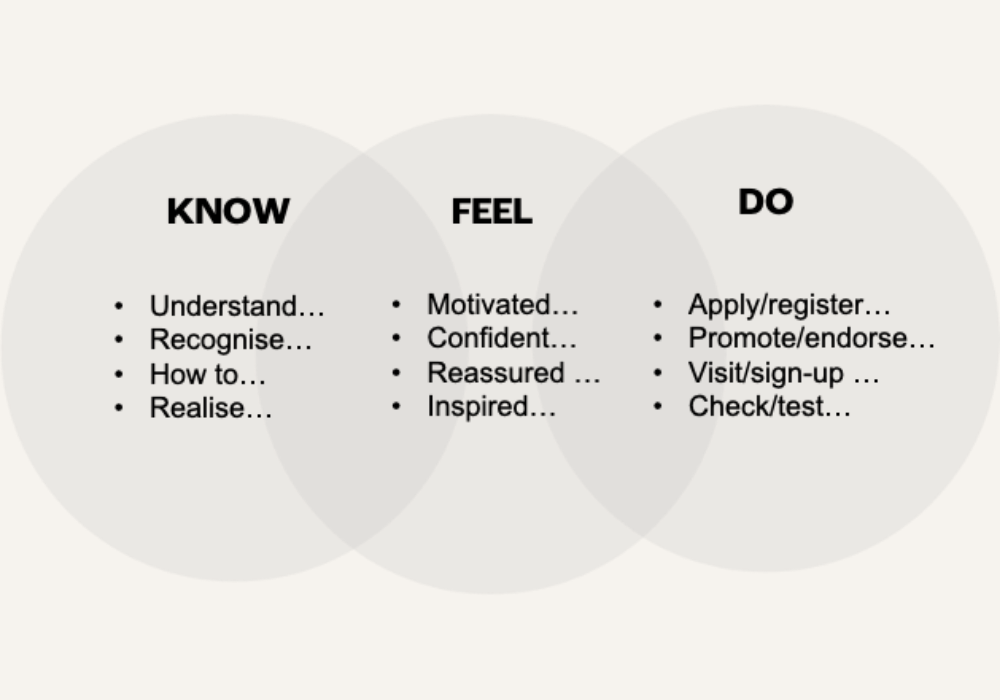
Or try the Know, Feel, Do process.
It hones in on the What (Know), the Why (Feel) and How (Do). Each part only needs a sentence or two but will quickly provide some focus to the campaign.
2. Comms Countdown
We know what order we’d like information given to us. A nice clear objective, some audience insight, the type of message we want to relay.
Then there’s the order it gets given to us. A random jumble of thoughts for us to play with.
And like Countdown, we have to take what’s thrown up and shape it into something coherent.
What to do about it: We need an anchor. Something to hold us firmly to the comms shore while the wild waves of information crash over us.
The AMEC Interactive Framework is just such a thing.
It provides a clear map for us to visualise the pieces of the jigsaw as they get thrown out there.
It walks us through each stage and provides explanation of what we need.
We can fill it online as we go and it saves everything for us.
And at the end of it all, it spits out a ready-made campaign report for us to show off. Result.
3. “Budget? Oh, there’s no budget…”
“So, the campaign just needs to achieve the world, in no time at all. Clear?”
“OK, what’s the budget?”
“Errrr…”
It’s the situation the phrase ‘expectation management’ was created for.
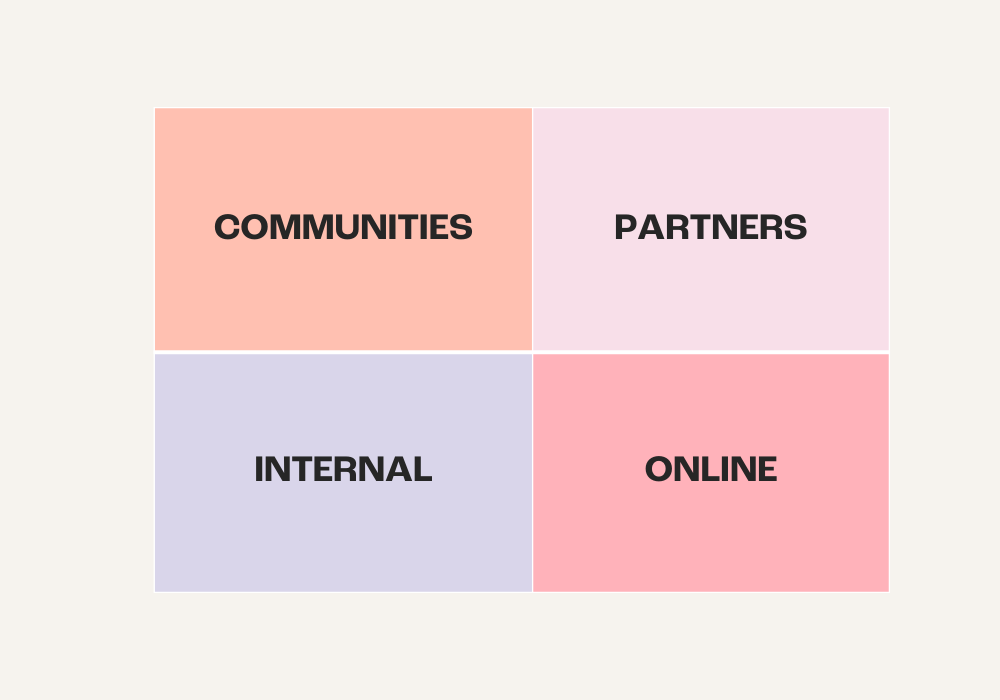
What to do about it: One word: amplify. When money for paid reach is in short supply, it’s so easy to forget to look closer to home at the potentially huge reach you might have right in front of you.
Your partners with newsletters and websites. Your staff with social accounts and families. Online groups and forums with huge memberships.
All free, all easily underestimated.
𝟰. The idea is not the idea
That vision you had of the clever campaign concept and strapline?
It will be butchered by numerous stakeholders and end up many miles from where you intended, 14 iterations later.
Will it still do what we need it to do, though?
What to do about it: For our campaign concept to retain any element of power after mass editing, it needs to maintain a core emotional truth – the connection that might move people to act on our campaign.
If we can build our idea on such a human truth, we can still win the day.
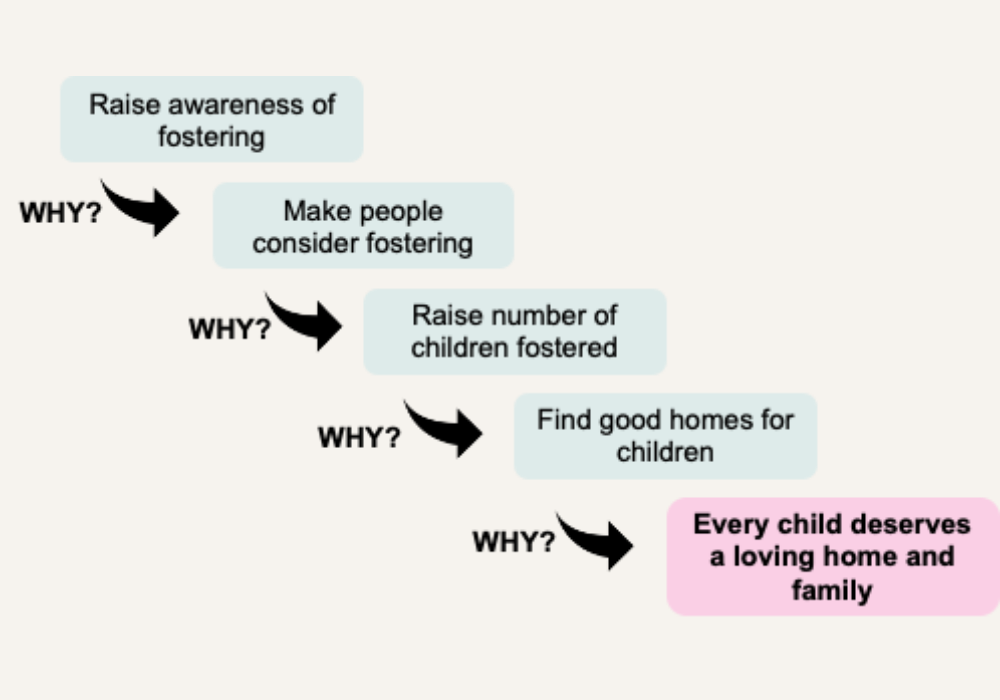
Try the 5 Whys flowchart. Developed by Toyota to drill down to the root cause of a problem, asking the question of Why up to five times can achieve a similar result for a campaign.
5. The inevitable curveball
Discovering a vaccine denier is fronting a Covid campaign the day before launch.
A General Election being called as a campaign for a Government-funded scheme is about to go live.
Yep, I’ve been there. You say you couldn’t make it up, but life often is stranger than fiction.
What to do about it: There’s no simple exercise or model that can deal with the vast variety of circumstances we might encounter during our campaigns.
What we can build in is flexibility.
Wriggle room in our timelines. The ability to pause or takedown a campaign if the worst happens. A concept that allows messaging or visuals to be easily tweaked.
And keeping stakeholders informed and onside throughout helps a million when you need to break unwanted news.
Embracing the chaos
These situations and scenarios will happen. They might even be happening right now.
So one of the biggest skills to learn in any campaign is to roll with what comes your way, with the handy tricks above up your sleeve to help douse the flames when they come.
- Need help creating and delivering campaigns with results? Find out more about our campaign and training services.